AdaptedMind Math: Learning App
- 4.4
- Rating
- 500.00K
- Installs
- Free
- Price

 Analysis by App-foxy
When I tried AdaptedMind Math, the part that stood out was not simply the presence of math games. It was the app’s attempt to adjust learning around a child’s needs instead of presenting exactly the same path to everyone. That idea sounds modest, but it changes how a short practice session feels: the child is not just answering a fixed worksheet on a screen, and the adult can use the app as a more flexible alternative to handing over another stack of exercises.
AdaptedMind Math: Learning App is an education app from AdaptedMind, aimed at children and available at no initial cost. It has a 4.5 average from around 2.4 thousand ratings, with more than 500 thousand installs. Those figures suggest that it has reached a substantial audience, but my interest is more practical: does the adaptive approach make home math practice easier to start and more useful to continue?
Adaptive practice is the feature that matters most
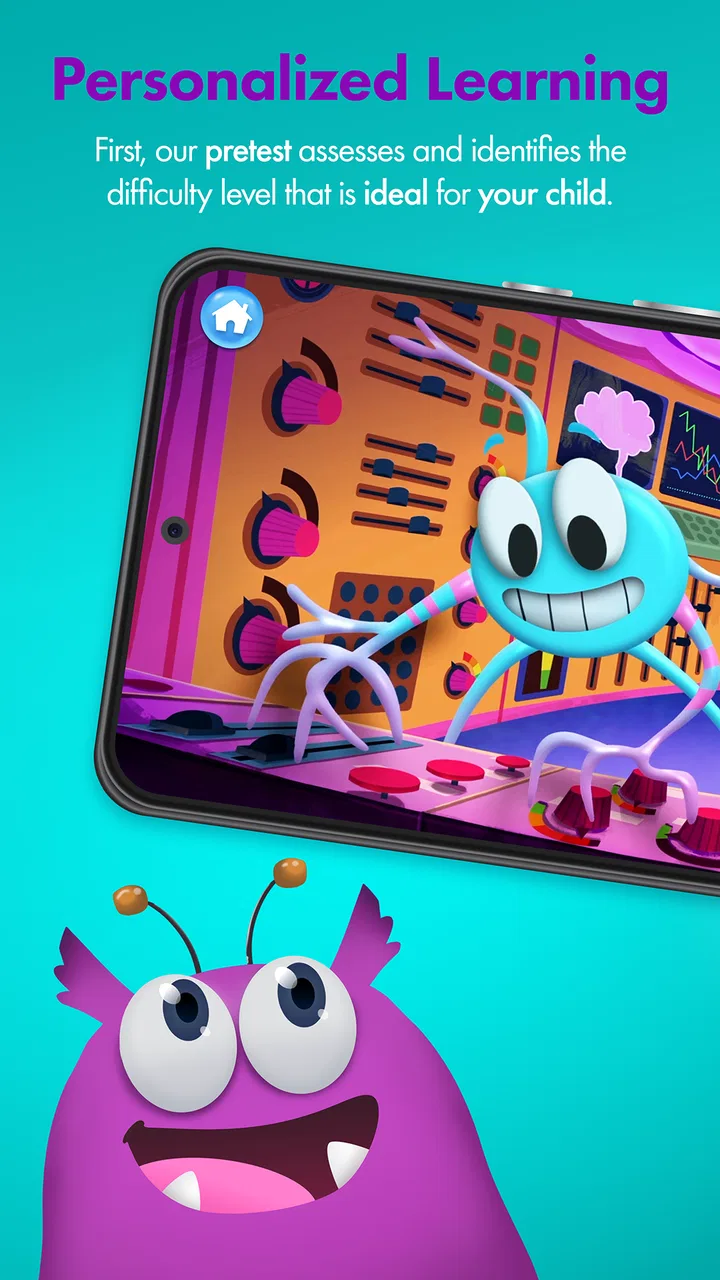
The central capability is personalized math practice presented through games. In my experience, the value of that combination depends on balance. A game can make a child more willing to begin, while personalization can reduce the two common problems with ordinary worksheets: work that is too easy becomes boring, and work that is too hard becomes discouraging.
You May Also Like

 Blood Strike: 2.5 Anniversary
Blood Strike’s Loadouts Turn Every Drop Into a Tactical Gamble
A close look at Blood Strike’s custom loadouts: how fast access to signature weapons reshapes its battle royale rhythm, rewards preparation, and narrows the gap between fights.

 Pandora - Music & Podcasts
Pandora’s Music Is Easy to Start, but Harder to Recover
Pandora’s strength is its low-effort path from a seed to a station. Its weak spot is how much confidence it asks you to place in connection, setup, and quiet recovery.

 8 Ball Pool
 Is Built on Rivalries, Rematches, and Routine
A close look at the rivalries, rematches, shared routines, and unanswered safety questions that turn a quick pool match into a persistent mobile community.

 Samsung Music
’s Quiet Strength Is Playing What You Already Own
Its reach comes less from spectacle than from dependable access to a personal library. That simplicity is both the app’s strongest retention engine and its ceiling.

 AccuWeather: Weather Radar
AccuWeather Review: A Quick, Clear Forecast for Everyday Decisions
For everyday plans, the best forecast is the one you can understand quickly. AccuWeather makes rain timing, radar, and local conditions easy to act on, with a few trade-offs.

 Hill Climb Racing
Why Hill Climb Racing Still Turns Crashes Into One More Run
A tiny car, a bumpy hill and one more upgrade: Hill Climb Racing keeps resurfacing because its simple chaos makes every near-miss feel personal.
More From Our News Desk



AdaptedMind Math is best understood as a guided practice tool rather than a replacement for a teacher. It gives a child a place to work through math activities in a more inviting format, while the adaptive element is intended to keep the material connected to the learner’s current needs. That distinction matters. I would not use it as the only source of instruction for a child who is struggling with a completely new concept, but I can see why it would be useful after a lesson, during revision, or when a parent wants extra practice without designing every question personally.
The game format also changes the emotional temperature of practice. A reluctant learner may be more open to “one more round” than to another page of calculations. That does not automatically make the learning deeper, but it can solve the first obstacle: getting the child to engage long enough to practise. The strongest benefit is consistency, not entertainment by itself. A short session repeated regularly is usually more useful than an ambitious session that happens only once.
I also appreciate that the app is positioned for Everyone in the content-rating sense, which makes it easier for families to consider for younger learners. The current version is 2.60302.11, and it runs on Android 7.0 or later. For a household using an older Android device, that minimum requirement is worth checking before planning around it. The app is free to install, while in-app purchases are listed from about $9.95 to $9.99 per item, so “free” should be read as an opportunity to try it rather than a promise that every possible part of the experience costs nothing.
What personalization changes during a normal session
In a typical home routine, I would begin by giving the child a clear, limited goal rather than saying, “Go and do math.” For example, the child might work until a natural stopping point, then explain one answer aloud. This makes the app part of a learning routine instead of turning screen time into an unstructured reward. The adaptive design can guide the level of challenge, but the adult still supplies the context: why the skill matters, where the child made a mistake, and when it is time to stop.
The practical advantage is that the parent does not have to prepare a fresh set of questions every evening. That saves time and reduces the temptation to repeat familiar exercises simply because they are easy to find. It is especially helpful when two children in the same family need different amounts of support. One child may need more repetition, while another may need a quicker move toward harder work. A personalized path is more convenient than printing identical material and manually sorting it afterward.
There is a useful distinction between a wrong answer and a misunderstanding. An adaptive app can react to performance, but it cannot always know whether a child guessed, rushed, misread the question, or genuinely lacks the underlying idea. I would therefore avoid treating every change in difficulty as a diagnosis. When a child misses several questions, I would pause and ask them to describe how they approached one of them. That small conversation often tells me more than the result alone.
Another practical tip is to keep a notebook nearby. If the activity involves mental calculation, the child may benefit from writing down a method rather than tapping until the answer appears. This is one of the trade-offs of digital math practice: the app can make repetition convenient, but paper still helps reveal place-value errors, skipped steps, and careless carrying. Used together, the two formats complement each other better than either one alone.
A realistic after-school use case
Imagine a child arriving home tired after school and resisting formal homework. I would not introduce the app as a test. I would offer a brief practice window after a snack, with the child sitting nearby rather than disappearing behind a device. If the first activities feel manageable, the child can build momentum without the immediate pressure of a worksheet. If the child starts guessing or becomes frustrated, I would stop the session and revisit the skill away from the screen.
This scenario shows where the adaptive approach has a real effect. It lowers the preparation burden for the adult and may lower the starting resistance for the child. The parent does not need to decide in advance which sequence of problems to select, and the child is less likely to face a page filled with questions that are all far below or above their comfort level. Still, I would keep the session purposeful. “Play until bored” is not a learning plan, and longer screen time is not automatically better practice.
For a child who already enjoys math, the app can provide extra repetition without making every exercise feel identical. For a child who avoids math because of anxiety, the game presentation may create a gentler entry point. In both cases, I would watch for signs that the child is focusing on speed or rewards rather than reasoning. Asking, “How did you know?” after a correct answer is a simple way to keep understanding at the center.
Where it fits beside worksheets, tutoring, and classroom work
Compared with ordinary worksheets, AdaptedMind Math is more convenient when the child needs changing levels of challenge. A worksheet is easy to print and easy to mark, but it is fixed. Once the page is made, it cannot respond to the learner. The app is more flexible for repeated practice, especially when the parent does not have time to create several versions of the same exercise.
Compared with flashcards, it offers a broader learning environment than quick recall alone. Flashcards can be excellent for number facts, but they do not always encourage a child to stay with a problem or practise a skill in varied ways. I would still use flashcards when the goal is fast recall, particularly in a short car ride or a few spare minutes, while choosing the app for a more structured sitting.
Compared with tutoring, the app is far less personal. A tutor can notice hesitation, change an explanation immediately, use objects or drawings, and respond to the child’s mood. AdaptedMind Math cannot replace that human interpretation. Its advantage is availability and repeatability: it can offer practice when a tutor is not present and without the scheduling commitment of a lesson. For a persistent gap in understanding, I would choose a teacher or tutor first and use the app afterward for reinforcement.
Compared with classroom instruction, it is narrower but more individually paced. A classroom provides discussion, collaboration, and explanations that connect math to a wider lesson. The app provides a private practice space, which can be valuable for a child who feels embarrassed about making mistakes in front of classmates. The best role for it is therefore supportive: it can strengthen a classroom skill, but it should not be expected to supply the full social and explanatory experience of school.
The trade-offs parents should notice before committing
The first limitation is that personalization can make the experience feel opaque to an adult. If the parent sees the child moving through activities but does not understand why a particular task appeared, it becomes harder to guide the session. I recommend asking the child to show one easy question and one difficult question. That gives a quick sense of whether the challenge feels appropriately placed, without turning the evening into an inspection.
The second limitation is the screen itself. Even a well-designed educational activity can become tiring when used for too long. Younger children may need reminders to sit comfortably, look away occasionally, and stop when concentration drops. I would rather use a short, attentive session than leave the app running while the child clicks mechanically. The adaptive system can adjust practice, but it cannot create good habits around posture, breaks, or motivation.
The third trade-off involves payment expectations. The app can be installed for free, but the presence of purchases means families should review what they are comfortable using before a child begins exploring. I would handle that conversation in advance and keep purchasing decisions with the adult. This is not a criticism unique to educational apps; it is simply an important part of making a child-focused tool feel predictable at home.
There is also a risk of overvaluing visible progress. A child may move through activities confidently while still relying on guesses or memorized patterns. To counter that, I would occasionally ask for an explanation without the app, create a similar question on paper, or change the wording of a problem. If the child can transfer the idea, the practice is doing something useful. If not, the family may need direct teaching rather than more rounds.
Finally, the app is not the right choice for every learner. A child who dislikes game-like presentation may find it distracting rather than motivating. A learner who needs manipulatives, spoken explanations, or immediate human correction may gain more from hands-on teaching. It may also be a poor fit for a family looking for a complete offline resource, since the appeal depends on using a digital device. In those situations, a workbook, tutor, or teacher-led activity may be the better first option.
Who is most likely to benefit from it
I think the best match is a family that wants regular extra math practice but does not want to prepare worksheets every day. It is particularly suitable when a child’s ability varies by topic and a fixed sequence often feels either repetitive or intimidating. The adaptive focus gives the child a better chance of meeting work at a reasonable level, while the game structure can make starting less of a battle.
It can also help parents who are not confident teaching math themselves. That does not remove the need for involvement, but it changes the adult’s job from creating every exercise to observing, encouraging, and explaining when necessary. A parent can sit beside the child, ask about the strategy used, and note which ideas cause trouble. That is a more manageable role than trying to build a complete curriculum from scratch.
For children preparing for a specific exam, I would be more cautious. General adaptive practice may strengthen underlying skills, but exam preparation often requires timed work, familiarity with a particular question style, and targeted review of known weak areas. I would use this app as one part of preparation, not as the whole plan. Likewise, children with significant learning difficulties may need specialized support that a general education app cannot provide on its own.
The app is also a reasonable choice for a child who needs a private place to practise. Some learners answer more freely when nobody is watching, and a game-based setting can make mistakes feel less public. The parent should still check in, because private practice can hide confusion as easily as it can reduce anxiety. A quiet environment is helpful, but it should not become a reason to leave the child without support.
My recommendation after weighing the experience
AdaptedMind Math succeeds when its adaptive math games are used as a bridge between formal teaching and everyday repetition. I like the way that approach can reduce preparation for parents and soften the first step for children who resist worksheets. The app’s free entry point makes it practical to explore, while the listed purchases mean I would set expectations before handing the device to a child.
I would recommend it to families seeking a convenient practice companion, especially when the main problem is keeping math work regular and appropriately challenging. I would not recommend relying on it alone for new concepts, serious learning gaps, or children who learn best through conversation and physical materials. My preferred routine would combine a short app session with paper work and a quick discussion about one strategy.
That is the honest strength of this education app: it can make repeated practice easier to organize and easier to accept. It is not a substitute for a teacher, a tutor, or an attentive parent, but it does not need to be. Used with clear limits and a little adult follow-up, AdaptedMind Math: Learning App is a useful option for turning occasional math practice into a steadier habit.
FAQs for AdaptedMind Math: Learning App
01What age group is AdaptedMind Math suitable for?
AdaptedMind Math is designed for children in grades K-6. It offers a wide range of lessons and activities tailored to different ages and skill levels, making it suitable for young learners who are just beginning their math journey as well as older children who need to reinforce their skills.
02Does AdaptedMind Math offer personalized learning?
Yes, AdaptedMind Math provides a personalized learning experience. The app adapts to each child's learning pace, ensuring that they are challenged appropriately. It tracks progress and adjusts the difficulty of tasks based on performance, allowing for a tailored educational experience that meets individual needs.
03Is AdaptedMind Math available on both Android and iOS?
AdaptedMind Math is accessible on both Android and iOS platforms. This cross-platform availability ensures that users can enjoy the app on a variety of devices, including smartphones and tablets, making it convenient for learning on-the-go or at home.
04Are there any costs associated with using AdaptedMind Math?
AdaptedMind Math offers a subscription-based model. While there may be a trial period available, continued access to all features and lessons typically requires a subscription. This model supports ongoing updates and the development of new content, ensuring a high-quality learning experience.
05How does AdaptedMind Math keep children engaged?
AdaptedMind Math employs a variety of methods to keep children engaged. It uses interactive lessons, gamified elements, and rewards systems to motivate learners. The app also offers colorful graphics and fun animations that capture children's attention and make learning math a more enjoyable experience.
Pros
- Interactive lessons for all ages
- Personalized learning paths
- Engaging game-based activities
- Progress tracking for parents
- Ad-free experience
Cons
- Limited offline access
- Requires subscription for full access
- No support for advanced math topics
- Occasional app crashes
- Limited language options

AdaptedMind Math: Learning App
Gallery